
Last week’s sell-off brought me back to a point I made in AI’s Three Clocks. The Nasdaq fell 5.5% on 5 November. Demand for AI can keep growing while investors rethink who can afford to build the infrastructure. Cboe market recap ↗
I still think neoclouds can be very good businesses. These specialist cloud providers can put large GPU clusters to work quickly and give customers more choice. The financing has to fit the business. CoreWeave’s $2.6 billion August facility runs for about five years, while the underlying customer contracts average three. What will those chips earn when the first contracts expire? That question matters even if demand for AI keeps rising. CoreWeave financing disclosure ↗
My prediction is that independent providers will eventually need some government support to compete at scale. I can see partial guarantees for capital expenditure loans, leases on suitable public land and faster grid connections. I’d tie guarantees to projects with customers already committed, private capital at risk and a plan to pay for the additional power and water. The U.S. already leases federal land for a planned AI campus in Ohio. Without wider access to sites and long-term financing, I expect the hyperscalers to capture most of the buildout. They can fund construction from their own balance sheets and use some of the capacity themselves. U.S. Department of Energy ↗
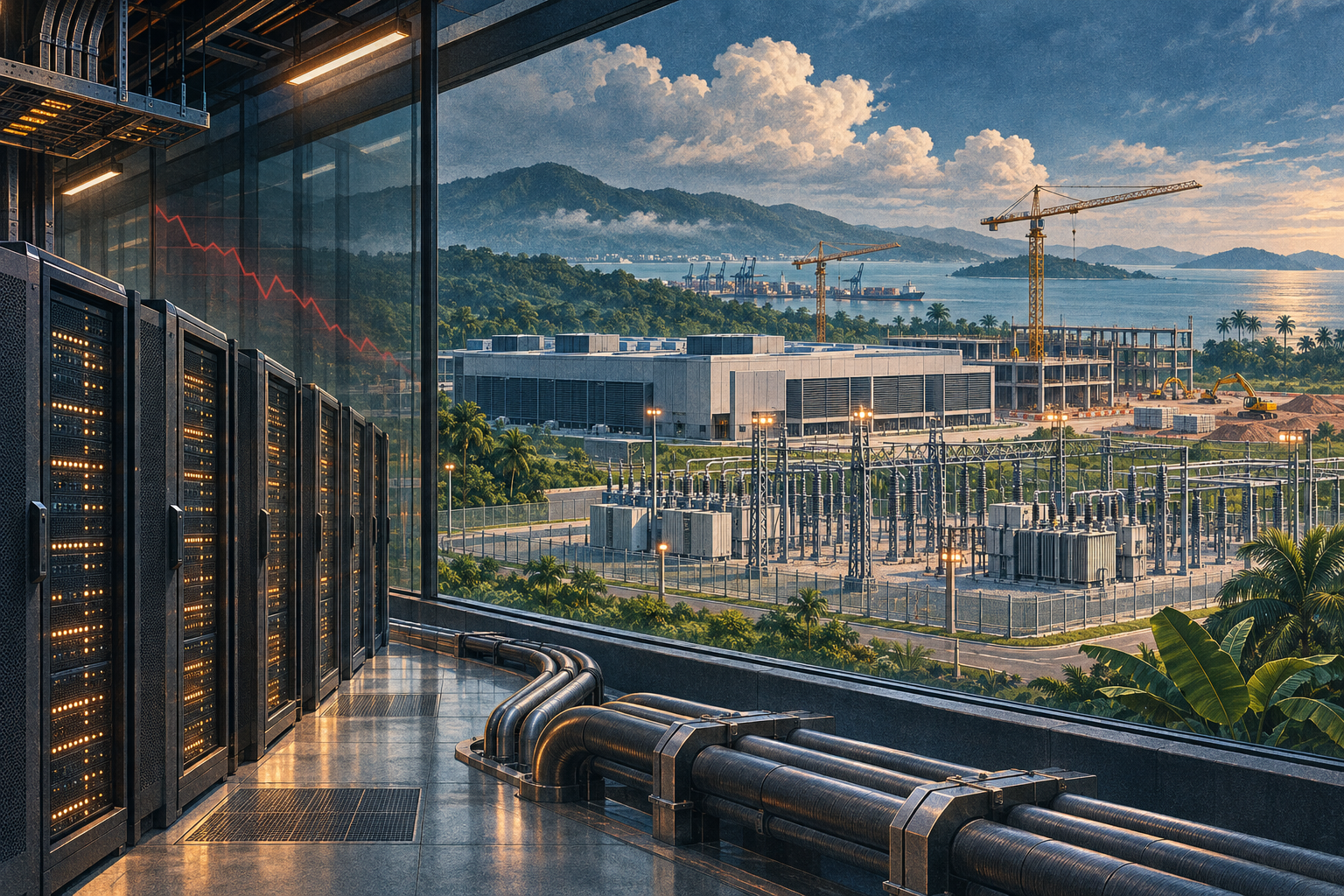
The U.S. midterms add a global dimension. AP called both the House and Senate for Democrats. What I’m watching is how policymakers handle electricity costs and how states and communities decide where new campuses can go. If local restrictions slow projects in the U.S., I expect Southeast Asia to win a larger share of the next wave. Google’s US$15 billion Malaysia plan builds on an investment announced in 2024, which shows the region already has momentum of its own. The sites that win will need reliable power, fibre and cooling, and they’ll have to work within chip export and data residency rules. AP election calls ↗ Google’s Malaysia investment ↗
At IJK, we still believe AI will be the biggest driver of global economic growth for decades. The investment question I’m watching now is who can turn that demand into cash flow while their chips are still valuable, and which countries can get new capacity connected to the grid.